
More Information
Submitted: July 23, 2026 | Accepted: August 24, 2026 | Published: August 25, 2026
Citation: Yuan Y, Liu X, Cao Z, Zhou L, Tian K, Gan L. Clinical Application of Catheter-directed Thrombolysis Combined with Primary Iliac Vein Stent Implantation in the Treatment of Iliac Vein Compression with Acute Lower Limb Deep Vein Thrombosis. J Radiol Oncol. 2026; 10(2): 36-41. Available from:
https://dx.doi.org/10.29328/journal.jro.1001091
DOI: 10.29328/journal.jro.1001091
Copyright license: © 2026 Yuan Y, et al. This is an open access article distributed under the Creative Commons Attribution License, which permits unrestricted use, distribution, and reproduction in any medium, provided the original work is properly cited.
Keywords: Iliac vein stent implantation; Catheter-directed thrombolysis; Deep vein thrombosis; Iliac vein compression

Clinical Application of Catheter-directed Thrombolysis Combined with Primary Iliac Vein Stent Implantation in the Treatment of Iliac Vein Compression with Acute Lower Limb Deep Vein Thrombosis
Yuhang Yuan1#, Xin Liu1#, Zhumin Cao1,2#*, Lei Zhou1,2#*, Ke Tian1,2#* and Lin Gan1,2#*
1Department of Vascular Surgery, The Seventh People’s Hospital of Chongqing, Chongqing, 400054, P.R. China
2Chongqing Engineering Research Center for Intelligent Minimal & Non-invasive Medical Devices, Banan Advanced Technology Innovation Center, Huaxi Street, Banan District, Chongqing 400054, P. R. China
#Equal Contribution
*Corresponding author: Lei Zhou, Master of Medicine, Gonglian First Village, Lijiatuo Subdistrict, Banan District, Chongqing, 400054, China,Email: [email protected]
Ke Tian, Master of Medicine, Gonglian First Village, Lijiatuo Subdistrict, Banan District, Chongqing, 400054, China, Email: [email protected]
Lin Gan, Master of Medicine, Gonglian First Village, Lijiatuo Subdistrict, Banan District, Chongqing, 400054, China, Email: [email protected]
Objective: Iliac vein compression syndrome (IVCS) with acute lower extremity deep vein thrombosis (DVT) is associated with significant morbidity, including chronic venous insufficiency and post-thrombotic syndrome. This study aims to evaluate the efficacy and safety of catheter-directed thrombolysis (CDT) combined with ZYLOX® Penguin venous stent implantation (first-stage) in treating IVCS-DVT.
Methods: We conducted a retrospective analysis of 56 patients with IVCS and acute lower extremity DVT who underwent CDT with concurrent iliac vein stenting at The Seventh People’s Hospital of Chongqing between June 2023 and March 2024. Clinical outcomes were assessed by measuring pre- and postoperative limb circumference differences, thrombus clearance rates, and rate of thrombosis in the right iliac vein and inferior vena cava. Follow-up evaluations at 1, 3, 6 and 12 months postoperatively included venous clinical severity score (VCSS) assessment and stent patency evaluation.
Results: The procedure achieved a technical success rate of 100%, with 98.2%.In 56 patients, the difference of circumferential diameter between the both side of lower limb (thigh and calf) decreased from preoperative (6.18 ± 0.91) cm and (3.98 ± 0.87) cm to postoperative (1.33 ± 0.64) cm and (1.21 ± 0.52) cm, respectively, with statistical significance (all p < 0.05). Primary patency was 12 months and significant symptom improvement as indicated by a reduction in Venous Clinical Severity Score (VCSS) from 9.9 ± 1.9 to 4.6 ± 1.3 (p < 0.05). Complications were minimal, including puncture-site bleeding (1.8%) and transient hematuria (8.9%), with no deaths or severe pulmonary embolism reported.
Conclusion: The application of CDT combined with first-stage iliac vein stent implantation for IVCS with acute lower limb DVT is safe and effective, and has a good clinical application prospect.
Iliac vein compression syndrome (IVCS), also known as May-Thurner syndrome, has garnered attention due to its significant association with acute lower extremity deep vein thrombosis (DVT) [1]. This condition arises when the left common iliac vein is compressed between the overlying right common iliac artery and the lumbar vertebrae, leading to venous outflow obstruction and related complications such as chronic venous insufficiency and post-thrombotic syndrome [2,3]. The morbidity associated with IVCS-DVT is considerable, with affected individuals often facing prolonged treatment courses and disability, highlighting the urgent need for effective therapeutic strategies to address this condition [4,5].
Current treatment modalities primarily include anticoagulation, catheter-directed thrombolysis (CDT), and stenting; however, each approach has inherent limitations [6]. Anticoagulation, while critical in managing thrombus formation, does not address the underlying anatomical obstruction, thereby leaving patients at risk for recurrence. CDT, although effective in thrombus clearance, may not achieve satisfactory long-term results when used alone, especially in the presence of significant vein compression. Stenting has emerged as a potential solution to provide structural support and improve patency. However, the current stents available for iliac vein implantation have some disadvantages, such as dissection of blood vessels, poor flexibility, and small support force. After implantation, it often affects the blood flow on the opposite side, causing displacement and shortening, and the treatment results of IVCS are not ideal [6,7]. The ZYLOX® Penguin venous stent, characterized by its unique design aimed at enhancing anatomical conformity and minimizing complications, presents a promising avenue for investigation in this context. The innovative design may contribute to improved outcomes by addressing both the thrombus and the anatomical impediments simultaneously [8]. Furthermore, there is no uniform standard for when the venous stent should be placed [9]. Therefore, it is of great significance to explore the efficacy and safety of catheter-directed thrombolysis (CDT) combined with first-stage venous stent implantation in treating IVCS-DVT.
This study proposes a retrospective analysis of patients undergoing combined CDT and ZYLOX® Penguin stent implantation for the treatment of IVCS-DVT. The methodology includes a comprehensive assessment of thrombus clearance, stent performance, and mid-term outcomes, utilizing standardized protocols and quantitative metrics such as the Venous Clinical Severity Score (VCSS) [10] and limb circumference measurements. The primary objective is to evaluate the procedural success, safety, and clinical effectiveness of this combined therapeutic approach.
| The revised Venous Clinical Severity Score (r-VCSS) | ||||
| Variable | Description (score) | |||
| Absent (0) | Mild (1) | Moderate (2) | Severe (3) | |
| Pain* or ulcer discomfort | None | Occasional | Daily, interfering with, but not preventing regular activities | Daily, limiting most regular activities |
| Varicose Veins | None | Few, scattered or corona phlebectatica | Confined to calf or thigh | Involve calf and thigh |
| Venous oedema | None | Limited to foot or ankle | Extends above ankle but below knee |
Extends to knee or above |
| Skin pigmentation | None or focal | Limited to perimalleolar area | Diffuse over lower third of calf |
Wider distribution (above lower third of calf) |
| Inflammation | None | Limited to perimalleolar area | Diffuse over lower third of calf |
Wider distribution (above lower third of calf) |
| Induration | None | Limited to perimalleolar area | Involving lower third of calf |
Involving more than lower third of calf |
| Number of active ulcers | None | 1 | 2 | >2 |
| Active ulcer duration | None | < 3 mo | > 3 mo but < 1 y | > 1 y |
| Active ulcer size | None | Diameter < 2 cm | Diameter 2e6 cm | Diameter > 6 cm |
| Compression therapy | Not used | Intermittent use of stocking | Stocking use most days | Full compliance with stockings |
| * Ache, heaviness, fatigue, soreness, and burning presumptive of a venous origin. | ||||
Ethics statement
This retrospective study was approved by the Ethics Committee of The Seventh People’s Hospital of Chongqing (Approval No.: [批件号]; Date of Approval: [日期]). Due to the retrospective nature of the study, which utilized only de-identified patient data, the requirement for informed consent was waived by the ethics committee. All procedures performed were in accordance with the ethical standards of the institutional and/or national research committee and with the 1964 Declaration of Helsinki and its later amendments or comparable ethical standards.
Patients and samples
Retrospective analysis of the case data of 56 patients with IVCS combined with acute lower limb DVT treated with CDT combined with ZYLOX® Penguin iliac vein stent implantation at The Seventh People’s Hospital of Chongqing from June 2023 to June 2024. The time from onset to hospitalization ranged from 8hours to 14 days, with an average of (7.26 ± 3.80) days; among them, 21 were male, and 35 were female; age (61 ± 6.46), ranging from 51 to 75 years old. Patient information and lesion characteristics are shown in Table 1.
| Table 1 | |
| Parameter | Numerial number |
| Hypertension | 15(26.8%) |
| Hyperlipemia | 21(37.5%) |
| T2DM | 11(19.6%) |
| Coronary disease | 6(10.7%) |
| Cerebral infarction | 2(4.0%) |
| Smoking | 7(12.5%) |
| CEAP 分级 | |
| C3 | 14(25.0%) |
| >C3 Thrombus distribution |
42(75.0%) |
| central type | 13(23.2%) |
| mixed type | 43(76.8%) |
Inclusion criteria: 1.CEAP classification C3-C6, with significant iliac vein compression symptoms; 2.first acute (within 14 days) left lower limb DVT, preoperative antegrade venography of the dorsalis pedis showed thrombosis in the iliofemoral vein, and no prior surgical intervention; 3.venography showing left common iliac vein stenosis >50%;4. good cardiac and pulmonary function, able to tolerate interventional surgery.
Exclusion criteria: 1.iliac vein stenosis extending to the inferior vena cava; 2.iliac vein stenosis due to abdominal masses such as malignant tumors; 3.allergy to test drugs like iopamidol (contrast agent), heparin, aspirin, etc.; 4.life expectancy <1 year; 5.active bleeding or severe gastrointestinal bleeding.
Surgical treatment
The patient lies supine on the DSA examination table. The right inguinal region and the left calf are disinfected and draped with sterile drapes. Local infiltration anesthesia is administered. Using the Seldinger technique, the right femoral vein is punctured, and a 5F vascular sheath (Mairetong) is inserted. After peripheral vein cannulation and systemic heparinization, angiography is performed through the femoral vein to observe the blood flow in the inferior vena cava and pulmonary artery. After re-angiography to confirm the position of the renal vein, the filter is exchanged, and the sheath is placed, followed by the insertion of an inferior vena cava filter (Octoparms Kexel Medical / ZYLOX Octoplus Guichuang Medical). The filter is confirmed to be properly deployed and located at a distance of 0.5- 1.0 cm below the opening of the renal vein. Under DSA localization, using the Seldinger technique, the left posterior tibial or peroneal vein is punctured, and a 5F microvascular sheath (Mairetong Company, 21G puncture needle) is inserted. The vascular sheath performs multi-angle angiography to determine the deep vein thrombosis in the affected limb, as well as the location, degree, length, and distal outflow tract of the iliac vein lesion. A suitable eel guidewire is used in conjunction with a 4F single-bend catheter to pass through the lesion site. If passage is difficult, balloon dilation can be performed via the guidewire. A disposable infusion catheter kit (Mairetong thrombolytic catheter) is used, adjusting the system spray mode to spray urokinase (200,000 U) along the superficial femoral vein, external iliac vein, and common iliac vein on the lesion side. After waiting for 15 minutes for thrombolysis, a Venaccess® thrombectomy catheter (Tianhong Shengjie) is exchanged and repeatedly used to aspirate the thrombus. Re-angiography is performed to confirm the residual thrombus and the degree of iliac vein stenosis. If there is still residual thrombus, further aspiration can be performed, with the total aspiration time not exceeding 480 seconds. When complete thrombectomy or residual thrombus is difficult to aspirate, a balloon is introduced via guidewire to incrementally dilate the iliac vein stenosis. After dilation, re-contrast imaging reveals a distinct notch in the iliac vein with persistent stenotic symptoms, consistent with IVCS diagnosis. Based on the diameter of the common iliac vein and external iliac vein, the length of the lesion, and the available balloon, a suitable diameter and length ZYLOX® Penguin iliac vein stent is selected. The stent is introduced via a guidewire, precisely positioned, and then deployed to fully cover and extend beyond the lesion site by 1 cm. When the lesion involves the common iliac vein, the stent can protrude into the inferior vena cava (0.5- 1.0 cm). If the lesion affects the femoral-iliac vein, the stent must be implanted across the joint. The balloon is then reintroduced via guidewire to perform post-dilation of the stent to ensure full expansion. After satisfactory stent dilation, 3D contrast imaging shows the disappearance of the iliac vein notch, the elimination of surrounding collateral vessels, and unobstructed blood flow in the lumen. If the patient’s thrombus has been completely aspirated, the equipment is withdrawn, the sheath is removed, and the puncture site is packed with pressure dressing. If the residual thrombus is difficult to aspirate, a disposable infusion catheter set (Mairet thrombolytic catheter) of appropriate length is left in place via guidewire at the thrombosis site. The catheter and vascular sheath are secured, and upon return to the ward, continuous infusion of urokinase (60-120 million U/d) is administered through the catheter for thrombolytic therapy. Four to seven days later, contrast imaging is performed to re-evaluate the thrombolysis, during which D-dimer, plasma fibrinogen, and platelet count are monitored, and the dose of urokinase is adjusted as needed. After thrombolysis, the sheath is removed, and the puncture site is packed with a pressure dressing (Figures 1-4).
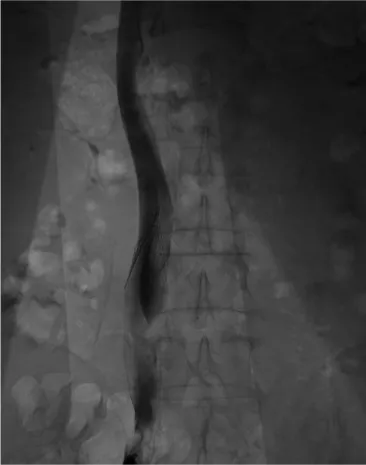
Figure 1: IVCF placement.
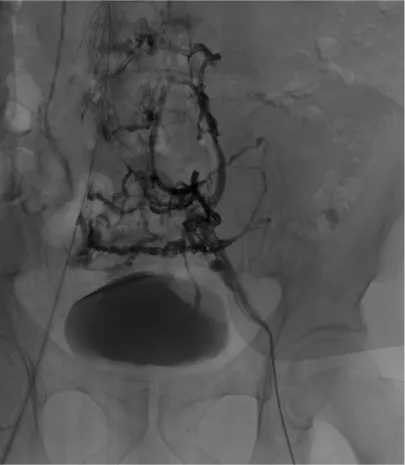
Figure 2: Contrast imaging confirmed iliac vein compression syndrome.
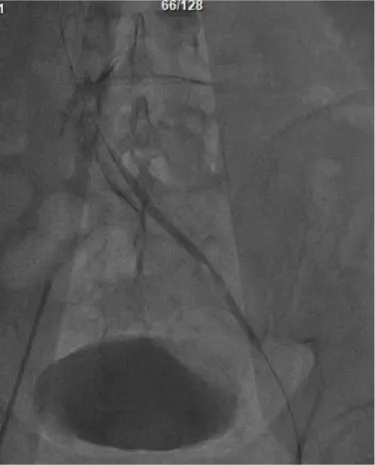
Figure 3: Iliac vein balloon dilation.
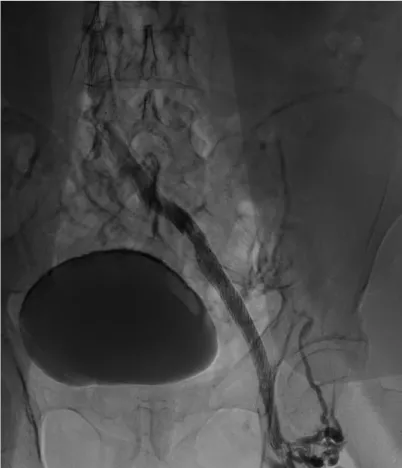
Figure 4: Iliac vein stent placement.
Postoperative treatment and follow-up
The patient does not need immobilization after surgery and is given oral rivaroxaban (30 mg/d), with the dose adjusted to 20 mg/d after 3 weeks. Regular monitoring of coagulation indicators is required, paying attention to any signs of bleeding, and long-term standardized anticoagulation therapy should be conducted under the guidance of a physician. The puncture site should be checked for bleeding, exudation, or hematoma. Patients are instructed to wear compression stockings consistently after discharge for pressure therapy. The inferior vena cava filter should be removed within the standard time window. Outpatient follow-ups are conducted at 1, 3, and 6 months post-surgery. During these follow-ups, color Doppler ultrasound or CTV is performed to assess the blood flow in the iliac veins and deep veins of the lower limbs. If a patient is lost to follow-up, they are included in the statistical analysis based on the last follow-up time.
Observational indicators
Thrombus removal rate: The thrombus removal rate is divided into three levels based on the DSA images showing the effectiveness of thrombus aspiration before and after CDT treatment: 1. Thrombus removed to over 95% is considered complete removal; 2. Thrombus removed to 50%-95% is considered partial removal; 3. Thrombus removed less than 50% is considered minimal removal. Partial and complete removal are defined as technical successes. Independent comparison and judgment are conducted by two senior vascular surgeons (with more than 8 years of experience in this field).
Improvement of lower limb swelling: The circumference of the thigh (20cm above the patella) and the circumference of the lower leg (15cm below the patella) were measured before and after the operation, and the difference between the circumference of the affected side and the other side was recorded and calculated.
Venous clinical severity score (venous clinical severity score, VCSS): The lower the score, the milder the symptoms, according to the VCSS scoring system for quantifying the lower limb symptoms of patients, with a total score of 30.
First-stage patency rate of the target vessel: the proportion of patients who maintain patency of the target vessel after treatment and do not have clinical symptoms, and do not need to undergo secondary surgery. Restenosis of the target vessel is regarded as a positive event of first-stage patency after surgery. Restenosis refers to the finding of target vessel stenosis of more than 50% by venography.
First-stage patency rate of the target vessel: the proportion of patients who maintain patency of the target vessel after treatment and do not have clinical symptoms, and do not need to undergo secondary surgery. Restenosis of the target vessel is regarded as a positive event of first-stage patency after surgery. Restenosis refers to the finding of target vessel stenosis of more than 50% by venography.
Statistical process
The data were analyzed and processed using SPSS25.0 software. Measured data were expressed as mean ± standard deviation. The differences in VCSS and lower limb circumference before and after surgery were compared using t-tests, with p < 0.05 indicating statistically significant differences. The one-year patency rate at 6 months post-surgery was calculated using the Kaplan-Meier survival analysis.
All 56 patients underwent successful surgery without any serious surgical complications such as vascular wall damage or symptomatic pulmonary embolism, and there were no fatalities. After CDT treatment, 52 cases achieved complete thrombus clearance, 4 cases had partial clearance, and none showed minimal clearance. Among them, nearly 100% of the cases involved 37 patients, with 1-5% residual thrombus in 3 cases and 5-10% residual thrombus in 1 case. Four patients underwent catheter contact thrombolysis again, achieving complete thrombus dissolution, with a 100% success rate for thrombus clearance techniques. During the same period, 56 ZYLOX® Penguin iliac vein stents were implanted, with a stent length (86.9 ± 25.2) mm and a stent diameter (13.1 ± 1.8) mm. One patient (1.8%) experienced bleeding at the puncture site during thrombolysis, which stopped after local pressure application; five patients (8.9%) experienced transient lower back pain during surgery; five patients (8.9%) experienced transient hematuria postoperatively, which resolved spontaneously within 2 days without special treatment. The hospital stay was (7.3 ± 1.5) days.
All 56 patients were followed up, with an average follow-up of 11 months (10-12 months), and no cases of loss to follow-up were observed. During the follow-up period, none of the patients experienced stent displacement, dislodgement, or fracture, and there were no deaths. Improvement in lower limb swelling and VCSS scores: The difference in circumferences between the affected and healthy sides of the thighs and calves for all 56 patients decreased from preoperative (6.18 ± 0.91) cm, (3.98 ± 0.87) cm to postoperative (1.33 ± 0.64) cm, (1.21 ± 0.52) cm, with statistically significant differences (t:36.11,48.04, p < 0.05). At 12 months postoperatively, the VCSS score of all 56 patients was significantly lower than preoperatively (9.9 ± 1.9 to 4.6 ± 1.3, t=13.74, p < 0.05), with statistically significant differences (Table 2). At 12 months postoperatively, one patient developed intrastent thrombosis (1.8%), which was successfully resolved and recanalized after revascularization with catheter-directed thrombolysis. The primary patency rate at 12 months postoperatively was 98.2%, and the rate of surgical re-intervention was 1.8% (Table 3).
| Table 2: Data before and after treatment. | ||||
| Study group(n = 56) | t | P | ||
| Difference in circumferences | Before | 6.18±0.91 | ||
| After | 1.33±0.64 | 36.11 | 0.019 | |
| Difference in circumferences | Before | 3.98±0.87 | ||
| After | 1.21±0.52 | 48.04 | 0.024 | |
| VCSS score | Before | 9.9± 1.9 | ||
| After | 4.6 ± 1.3 | 13.74 | 0.005 | |
| Table 3: Patency rate after treatment. | ||||
| Study group(n = 56) | ||||
| Date Patency rate | 1month | 3month | 6month | 12month |
| 56(100%) | 56(100%) | 55(98.2%) | 55(98.2%) | |
Iliac vein compression syndrome (IVCS), also known as May-Thurner syndrome, arises from the compression of the left common iliac vein between the right common iliac artery and the lumbar vertebrae. This anatomical abnormality can result in significant venous outflow obstruction, leading to conditions such as chronic venous insufficiency and acute lower extremity deep vein thrombosis (DVT) [1]. The clinical manifestations of IVCS include unilateral leg swelling, pain, and the potential development of venous ulcers, which severely affect patients’ quality of life [11]. Despite the recognized significance of IVCS, treatment options have traditionally been limited to anticoagulation and surgical interventions, with varying degrees of success [11]. Consequently, there is an urgent need to explore innovative therapeutic approaches to improve outcomes for patients suffering from this condition.
This study investigates the efficacy of catheter-directed thrombolysis (CDT) combined with ZYLOX® Penguin venous stent implantation in patients diagnosed with IVCS and acute DVT. Prior research has indicated that while standalone treatments such as CDT or stenting have shown partial success, the implementation of a combined approach remains under-explored [12]. The design of the ZYLOX® Penguin stent promises enhanced anatomical conformity and may mitigate stent-related complications, offering a novel therapeutic potential in the management of IVCS [8]. By conducting a retrospective analysis of 56 patients, this study aims to evaluate the procedural success, safety, and mid-term outcomes associated with the combined intervention, providing critical insights into a potentially transformative treatment strategy for IVCS-DVT patients.
This study innovatively addresses a crucial gap in the management of iliac vein compression syndrome (IVCS) with acute deep vein thrombosis (DVT) by evaluating the combined approach of catheter-directed thrombolysis (CDT) and ZYLOX® Penguin stent placement. Previous research has highlighted the limitations of standalone treatments, such as CDT or stenting alone, particularly regarding thrombus clearance efficiency and long-term patency rates [12]. Our findings demonstrate a 100% technical success rate and a 98.2% 6-month patency, suggesting that the combined approach may significantly enhance treatment outcomes for patients with IVCS-DVT, thereby addressing unmet clinical needs in this patient population.
The implications of our results extend beyond individual patient care. By demonstrating the efficacy and safety of this combined therapeutic strategy, we provide a potential new standard for treatment protocols in IVCS-DVT, which may influence clinical practice guidelines and enhance patient management strategies. These findings suggest that the incorporation of the ZYLOX® Penguin stent and optimized CDT protocols could lead to improved patient outcomes, reduced risks of complications, and lower healthcare costs associated with prolonged treatments and recurring DVT episodes. Furthermore, the sustained improvement in clinical symptoms, as indicated by a significant reduction in the Venous Clinical Severity Score (VCSS), underscores the potential for long-term benefits associated with this intervention.
However, this study is not without limitations. The relatively small sample size and the retrospective design may affect the generalizability of our findings. Additionally, the absence of a comparative control group restricts our ability to draw definitive conclusions about the superiority of this approach over existing treatments. Future multicenter, randomized controlled trials are needed to validate our findings and explore the long-term safety and effectiveness of the CDT combined with ZYLOX® Penguin stenting in a broader patient population. Addressing these limitations will be critical for advancing our understanding of IVCS-DVT management and ensuring that patients receive the most effective and safe treatments possible.
The study presents several limitations that must be acknowledged. Firstly, the relatively small sample size of 56 patients may limit the generalizability of the findings and reduce the statistical power necessary for robust conclusions. Additionally, the retrospective design inherently introduces biases related to data collection and outcome assessment, which may influence the interpretation of results. The absence of a comparative control group further complicates the ability to draw definitive comparisons between the combined treatment approach and existing therapies. These factors underscore the necessity for cautious interpretation of the outcomes, as larger, multicenter randomized trials are essential to validate the efficacy and safety of the combined CDT and ZYLOX® Penguin stent approach for IVCS-DVT.
At all, our findings indicate that the combination of catheter-directed thrombolysis and ZYLOX® Penguin stent implantation demonstrates high technical success, significant symptom improvement, and favorable midterm patency rates in patients with IVCS and acute DVT. The promising results, characterized by a 100% technical success rate and a 98.2% primary patency at six months, highlight the potential of this therapeutic strategy. Despite the limitations of this study, the outcomes warrant further investigation through larger, controlled trials to confirm the findings and optimize treatment protocols for this challenging patient population.
Funding: Supported by the Medical Science and Technology Research Program of Chongqing Banan Science and Technology Bureau and Chongqing Banan Health Commission (Grant No.BNWJ202300116).
- Harbin MM, Lutsey PL. May‑Thurner syndrome: History of understanding and need for defining population prevalence. J Thromb Haemost. 2020 Mar;18(3):534‑42. Available from: https://doi.org/10.1111/jth.14707
- Dix C, Clements W, Gibbs H, So J, AT H, DM J. Venous anomalies and thromboembolism. Thromb J. 2023;21(1):45. Available from: https://doi.org/10.1186/s12959-023-00484-5
- Al Ghananeem Z, Deshpande A, Sundaresan V, Abuzenah M, Abuzenah H. May‑Thurner syndrome: A rare, yet recognized, cause of deep vein thrombosis. Cureus. 2024 Aug 7;16(8):e66357. Available from: https://doi.org/10.7759/cureus.66357
- Poyyamoli S, Mehta P, Cherian M, Anand RR, Patil SB, Kalva S, Salazar G. May‑Thurner syndrome. Cardiovasc Diagn Ther. 2021 Oct;11(5):1104‑11. Available from: https://doi.org/10.21037/cdt.2020.03.07
- Jin W, Yu G, Huang J, Lu K, Huang C. Timing of endovascular interventions for iliac vein compression syndrome with thrombus. Clin Appl Thromb Hemost. 2021; 27:10760296211026974. Available from: https://doi.org/10.1177/10760296211026974
- Kim KA, Choi SY, Kim R. Endovascular treatment for lower extremity deep vein thrombosis: An overview. Korean J Radiol. 2021 Jun;22(6):931‑43. Available from: https://doi.org/10.3348/kjr.2020.0675
- Li C, Zhan Y, Wang Z, Gao Y, Ye K, Lu X, et al. Effect of stent treatment on hemodynamics in iliac vein compression syndrome with collateral vein. Med Eng Phys. 2023 May;115:103983. Available from: https://doi.org/10.1016/j.medengphy.2023.103983
- Liu H, Zeng Q, Li F, Wang X, Teng B, Zhao Y. Comparison of the Zylox Penguin Venous Stent System and Zilver Vena Stent for non‑thrombotic iliac vein lesions: A multicentre randomised controlled trial. Eur J Vasc Endovasc Surg. 2026 Feb 25;S1078‑5884(26)00198‑X. Available from: https://doi.org/10.1016/j.ejvs.2026.02.043
- Rodrigues LDS, Bertanha M, El Dib R, Moura R. Association between deep vein thrombosis and stent patency in symptomatic iliac vein compression syndrome: Systematic review and meta‑analysis. J Vasc Surg Venous Lymphat Disord. 2021 Jan;9(1):275‑84. Available from: https://doi.org/10.1016/j.jvsv.2020.08.022
- De Maeseneer MG, Kakkos SK, Aherne T, et al. Editor’s choice – European Society for Vascular Surgery (ESVS) 2022 clinical practice guidelines on the management of chronic venous disease of the lower limbs. Eur J Vasc Endovasc Surg. 2022 Feb;63(2):184‑267. Available from: https://doi.org/10.1016/j.ejvs.2021.12.024
- Radaideh Q, Patel NM, Shammas NW. Iliac vein compression: Epidemiology, diagnosis and treatment. Vasc Health Risk Manag. 2019 May 9;15:115‑22. Available from: https://doi.org/10.2147/VHRM.S203349
- Salahuddin T, Armstrong EJ. Intervention for iliofemoral deep vein thrombosis and May‑Thurner syndrome. Interv Cardiol Clin. 2020 Apr;9(2):243‑54.
- Moriarty JM, Dohad SY, Schiro BJ, Tamaddon H, Heithaus RE, Iliadis EA, et al. Clinical, functional, and quality‑of‑life outcomes after computer‑assisted vacuum thrombectomy for pulmonary embolism: Interim analysis of the STRIKE‑PE study. J Vasc Interv Radiol. 2024 Aug;35(8):1154‑65.e6. Available from: https://doi.org/10.1016/j.jvir.2024.04.028